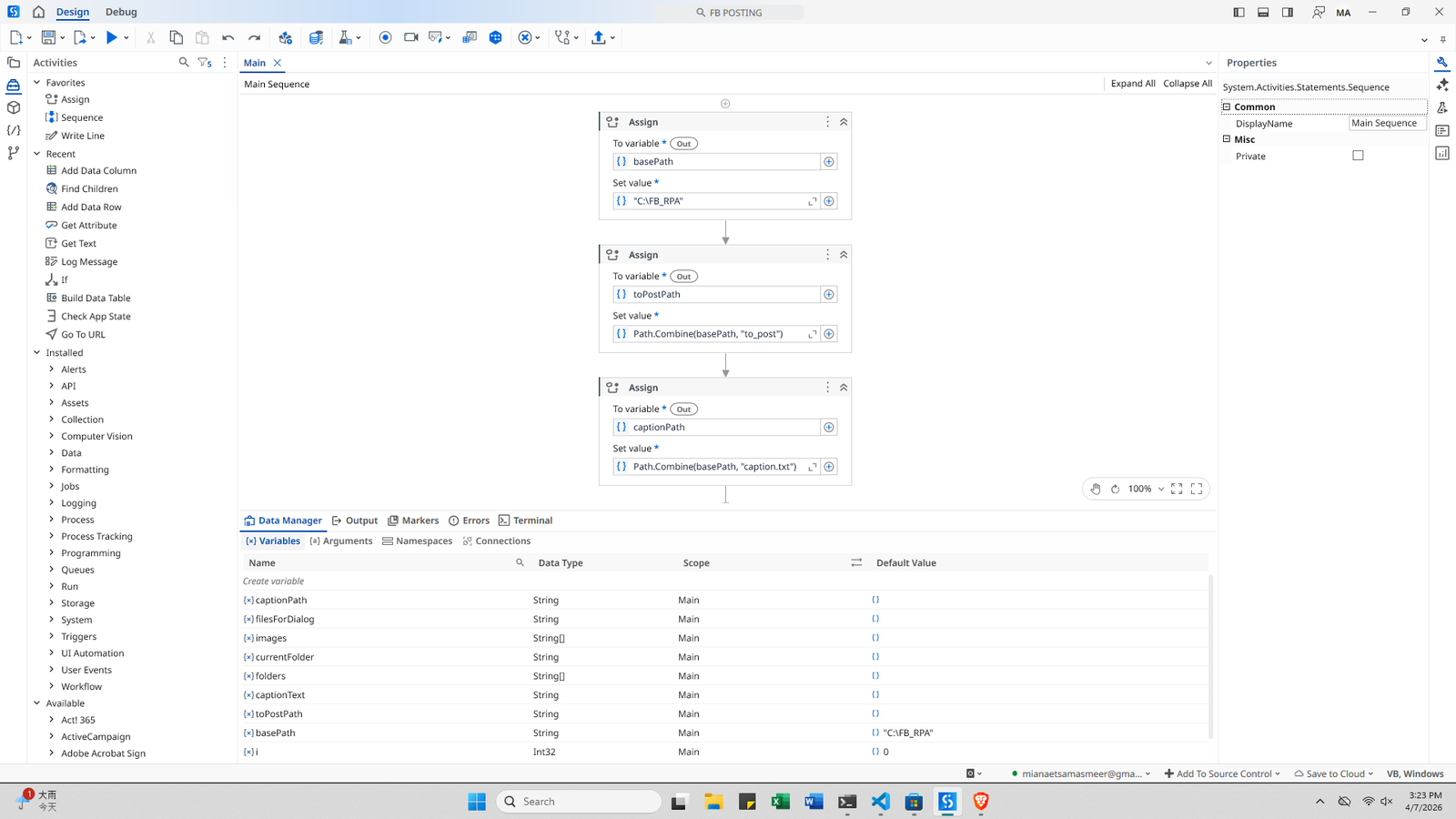
Workflow automation is sometimes framed as a speed tool. That description is not wrong, but it is incomplete. In a business environment, the real value of workflow automation is not simply that one task can be completed faster. The deeper value is that work becomes more structured, more repeatable, and easier to manage. When that happens, a business becomes easier to operate at scale. Dead time drops, responsibilities become clearer, and execution stops depending on memory or manual follow-up.
This matters because digital operations now stretch across many connected functions. A modern business may publish content, manage e-commerce updates, coordinate internal approvals, review analytics, respond to customer requests, and maintain multiple communication channels every week. Each of those activities can look manageable in isolation. The operational challenge appears when they overlap. If every handoff is manual, every update is ad hoc, and every process depends on individual effort, the system becomes harder to control as volume grows.
That is why workflow automation has become essential rather than optional. It helps businesses create a predictable operating structure around recurring work. Instead of asking team members to remember every step, the business defines the flow. Instead of relying on scattered notes, the business organizes triggers, actions, approvals, and outputs into a repeatable path. Automation then supports that path with consistency.
Digital operations fail when process quality is left to chance
Many businesses do not struggle because their teams lack talent. They struggle because operational quality is inconsistent. One person follows the right sequence. Another skips a step. A report is built differently every week. Product updates go live with different naming standards. Customer-facing content gets delayed because the review step was not clear. None of these issues are dramatic on their own, but together they create an operating environment that is harder to trust.
Workflow automation addresses that problem by giving recurring work a defined route. It makes the process itself visible. That route might include collecting information, validating it, formatting it, generating a draft, requesting approval, publishing the output, and recording the next action. Once the logic is clear, the business no longer needs to rebuild the process from scratch every time.
That shift is especially important for digital operations because the work often moves across tools and roles. A marketing update may depend on content inputs, design assets, SEO structure, reporting context, and publication timing. An e-commerce update may depend on product information, review checks, platform formatting, and campaign coordination. Strong workflow design reduces the amount of improvisation required at each step.
Automation is most valuable when it supports a complete workflow
One of the biggest mistakes businesses make is treating automation as a shortcut for isolated tasks. They automate a draft, a message, or a single notification, then expect the operation itself to become efficient. Usually, it does not. The manual complexity simply moves elsewhere. Someone still has to gather the inputs, correct inconsistencies, decide who reviews the output, and make sure the work reaches the next stage on time.
A better approach is to automate the workflow instead of automating only the task. That means asking different questions. What triggers this process? What information needs to be present before work begins? Which output format keeps the next person unblocked? What approval checkpoints are needed? Where do errors usually happen? Which parts require judgment, and which parts are repetitive enough to standardize?
When automation is designed around those questions, it becomes more than a convenience. It becomes an operating layer. The business gains a system that guides execution, improves visibility, and makes outcomes more reliable. The benefit is not only time savings. The benefit is operational control.
Common signals that a business needs workflow automation
There are several practical signs that workflow automation should become a priority. The first is recurring friction. If the same steps need to be repeated every day or every week, but each cycle still requires manual reassembly, the process is probably ready for systemization. The second sign is inconsistent quality. If two team members complete the same work differently, the business does not yet have a dependable workflow.
A third signal is poor reporting clarity. Many businesses produce updates, but the reporting flow is messy. Data is collected late, summaries are built manually, and the final output is difficult to compare from one period to the next. A fourth signal is missed handoffs. If work stalls because no one knew the next action, the process lacks a clear route. A fifth sign is growth pressure. As task volume increases, manual coordination becomes harder to sustain.
Operational areas where automation often creates strong value
- Weekly or monthly reporting workflows with recurring KPI review.
- Publishing operations for blogs, landing pages, or multilingual content.
- E-commerce product update flows with structured review and release steps.
- Internal request routing where approvals and next actions need visibility.
- Customer communication support where repeated formats can be standardized.
Workflow automation improves business clarity, not just business speed
Speed is useful, but clarity is usually the more durable advantage. When workflows are clear, people know where work begins, what a complete handoff looks like, and what standards define a finished step. That clarity reduces hesitation and removes avoidable backtracking. It also improves accountability because ownership becomes easier to see.
For decision-makers, this is important. Managers do not only want faster outputs. They want confidence that the process is stable. They want to know whether reports are comparable, whether updates are following the same logic, whether the team can handle more volume, and whether quality will remain consistent as the business grows. Workflow automation helps answer those questions because it forces operational logic into a more structured form.
That structure also improves onboarding. If a new contributor joins the operation, they can work inside a defined path instead of trying to reverse-engineer how things have been done informally. This reduces dependency on specific individuals and makes the system more resilient over time.
Modern digital operations depend on connected systems
Digital operations are rarely confined to one platform. A business might move between an e-commerce backend, analytics tools, spreadsheets, email, messaging channels, content documents, and internal review notes in a single workflow. Without structure, that cross-platform work becomes fragmented. Teams spend unnecessary time translating between formats, checking for missing details, and reconstructing context.
Workflow automation helps unify these moving parts. It does not need to remove every manual action. In many cases, the goal is simply to create a cleaner sequence. Information enters in one place, moves into a standard format, triggers the next action, and supports a review step that is easier to manage. This can apply to analytics and reporting, multilingual publishing, SEO operations, or daily business coordination.
That system-led perspective also creates a stronger foundation for broader service support. Whether the focus is automation, reporting, SEO-aware execution, or digital operations more generally, the operating value comes from how the pieces work together. The more clearly those pieces are connected, the more dependable the business becomes.
Workflow automation supports SEO, multilingual execution, and reporting discipline
Workflow automation is especially useful when the business has to maintain quality across repeated publishing and communication tasks. In SEO operations, for example, the challenge is not only writing content. It is maintaining page structure, metadata standards, internal linking, publishing consistency, and follow-up review. A workflow keeps those requirements visible. Automation can then assist by organizing inputs, creating structured drafts, or preparing summaries for review.
The same logic applies to multilingual operations. If a business publishes or communicates across languages, the source version, terminology review, adaptation step, QA check, and final release need to stay connected. Without a workflow, multilingual work can easily become fragmented. With a workflow, the business creates a cleaner route from source content to approved output.
Reporting also benefits from this structure. A report is not useful simply because it exists. It becomes useful when the data is collected consistently, the format supports comparison, the summary explains what matters, and the next action is visible. Workflow automation improves that chain by reducing repeated preparation work and reinforcing a standard operating structure.
How to introduce workflow automation without creating new complexity
Businesses do not need to automate everything at once. In fact, trying to do too much too quickly often creates confusion. A better starting point is one operational process that is repetitive, visible, and worth improving. Reporting, content publishing, e-commerce coordination, or approval routing are common candidates. The first step is to map the workflow honestly. What triggers it? What inputs are needed? What delays keep happening? Where does quality break down?
Once that map exists, the process can be simplified before it is automated. This is important. Automating a weak workflow often preserves weak logic. The business should first remove unnecessary steps, clarify ownership, and define what a complete output looks like. Only then should automation be added to the parts that are repetitive, structured, and safe to standardize.
That sequencing creates better long-term results. The goal is not to fill the operation with tools. The goal is to create an operating system that is easier to understand, easier to use, and easier to scale. Businesses that take that approach tend to build stronger workflows, stronger reporting habits, and better day-to-day execution.
Why this matters for authority-driven digital growth
Businesses often think about growth in terms of campaigns, traffic, or content output. Those are visible outcomes, but they are sustained by operational quality. If workflows are weak, growth efforts become harder to repeat. Content slips. Reports arrive late. Opportunities are missed because operational follow-through is inconsistent. Workflow automation strengthens the delivery system behind growth.
That is also why workflow thinking belongs inside an authority platform. The same mindset that improves digital operations also improves how a business publishes, communicates, and presents expertise. A stronger workflow leads to cleaner outputs, more dependable execution, and a more professional operating presence. You can see how that system-led approach connects across the project portfolio, the broader operating perspective, and the insight structure on the blog index.
Conclusion
Workflow automation is essential for modern digital operations because business execution now depends on connected, repeatable systems. The issue is not only efficiency. It is clarity, control, and consistency. When recurring work moves through a better-designed path, teams spend less energy reconstructing process and more energy making useful decisions.
For businesses that want scalable digital operations, workflow automation should be treated as part of operational design rather than a collection of isolated shortcuts. That is the difference between faster tasks and a stronger operating system.
Work With Me
Need a workflow system that supports cleaner digital operations?
I help businesses build practical workflow systems for automation, reporting, SEO-aware execution, and multilingual digital operations with a clean operational structure behind the output.